The New Garden Lyceum House

photo circa 1930 (CCHS)
Built in 1852 at the corner of Route 41 and New
Garden Road East,
moved in 2012 to the New Garden Township Park.
The Lyceum Movement
The Lyceum Movement began in New England in the 1820s to improve the education of adults and provide a cultural forum for concerns of the day. Hundreds of Lyceum Companies were formed around the country and noted lecturers and entertainers traveled the "Lyceum Circuit" from town to town. New Garden Township had three Lyceums: the New Garden Lyceum, one in Chandlersville (now Landenberg), and another on Pemberton Road.
The New Garden Lyceum House
In 1849 Enoch Lewis sold a quarter acre for $25 to the trustees of the New Garden Lyceum House Company for the purpose of erecting a Lyceum. A provision of the sale was that New Garden Township could hold its civic meetings there. The trustees were Joel Thompson, John Richards, Amos Barnard, George Thompson and Halliday Hoopes. The Hall itself was constructed in 1852.
Amos Barnard and Enoch Lewis were both associated with known abolitionists, and anti-slavery meetings were held in the New Garden Lyceum before the Civil War.
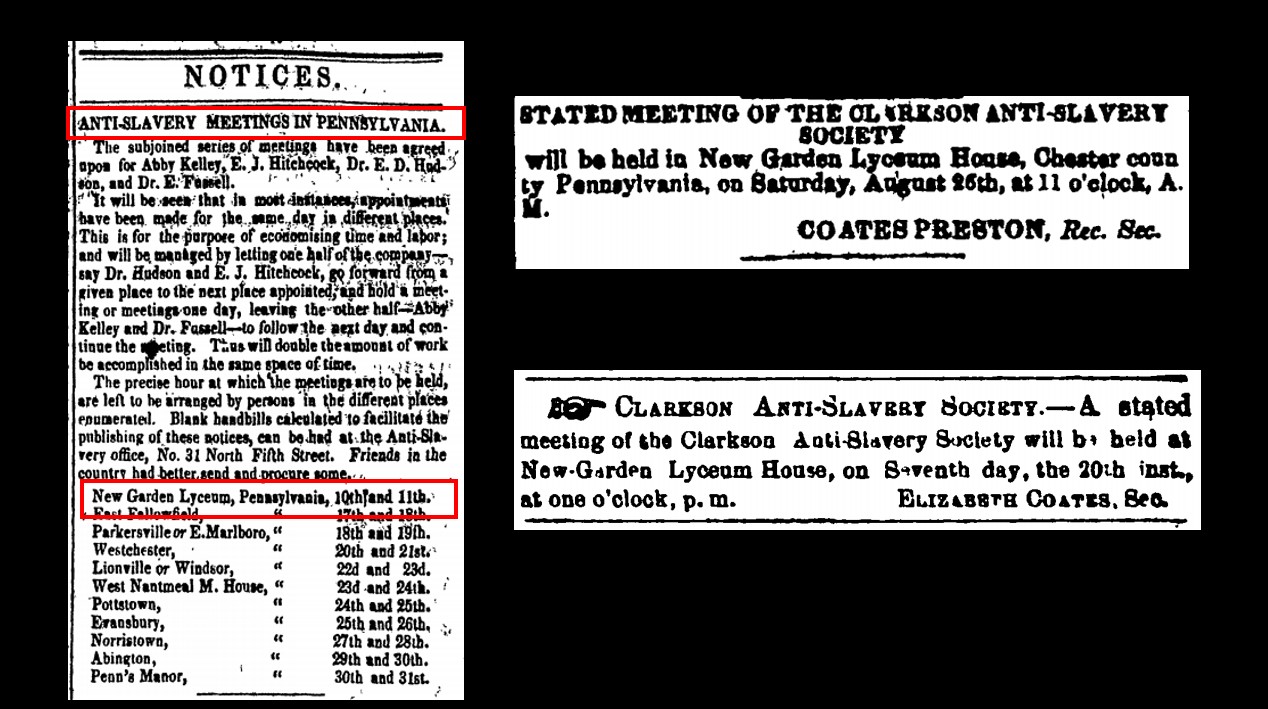
Anti-Slavery Society Meeting Announcements
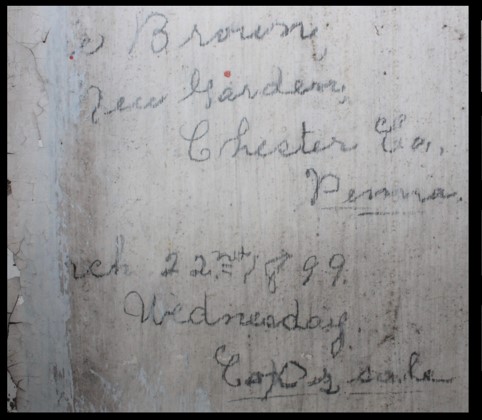
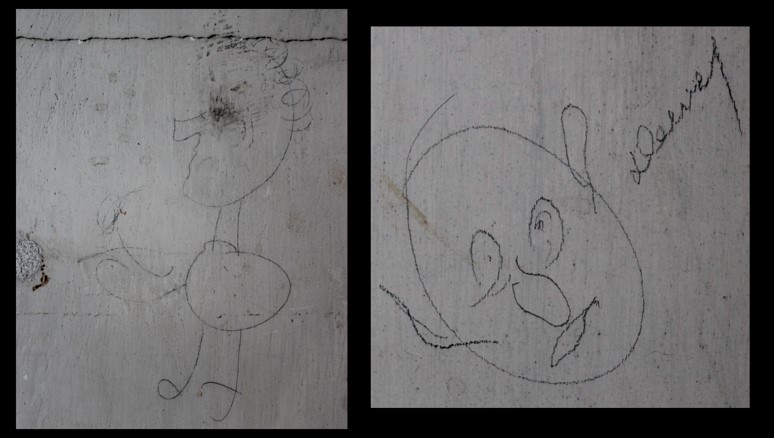
There was a neighborhood school in the vicinty as early as 1808, however by 1866 the Annual Report of the Superintendant listed that school house as being "especially worthy of condemnation". It is thought that the Lyceum started being used for classes around this time. Remains of graffitti from school children can still be found on the Lyceum walls.
In 1887 the Lyceum was formally deeded over to the township by the last surviving trustee for $1 with the provision that the Lyceum would continue to be used for its original purposes.
After the Civil War, civic debate turned to other matters including Prohibition.
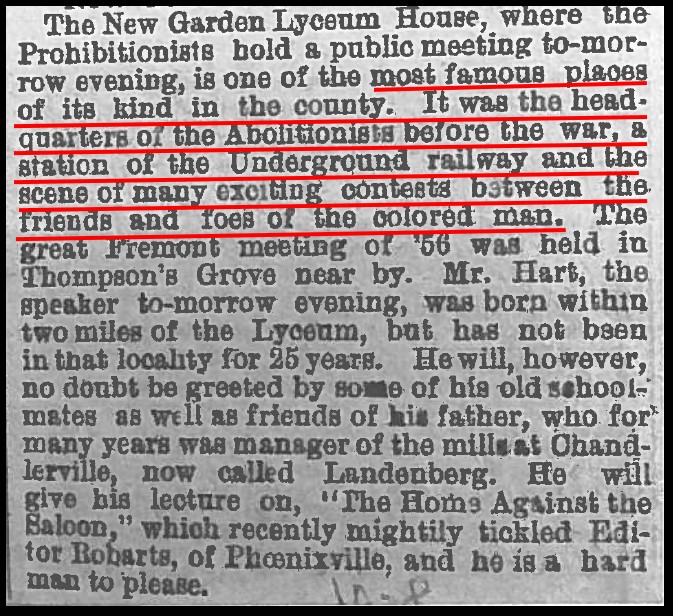
An 1888 Prohibition Meeting
(with earlier historical information underlined)
The Daily Local News, October 8, 1888
Classes for first through tenth grade continued to be held in the Lyceum until 1900 when the Central Grammar School was built next door (288 New Garden Rd, now a residence).
The Lyceum continued to be used by the township up until 1969, although only for storage in the later years. It was finally sold to neighbor Charles Williams who also used it for storage of, along with other things, the remains of a hand-built airplane that he had flown around the township for many years before crash-landing it in a tree near the White Clay Creek.
Preservation Efforts
Even before the sale in 1969 members of the community advocated that the Lyceum be preserved for its historic value. The New Garden Historical Commission has continued this advocacy. Concerns for the Lyceum increased markedly when PennDOT proposed widening Rt 41 in the early '90's thereby directly threatening the building.
Save-The-Lyceum Rally, March 2010

Finally funds were made available and in May 2012 it was moved to New Garden Park and placed on a new foundation. The project, led by Supervisor Bob Perrotti, was carried out by township employees and Wolfe House & Building Movers, LLC.
Preparation for the move
On the road
Bob Perrotti inspecting the Lycuem before it was slid into position over the new foundation
Lyceum being lowered onto new foundation
Video


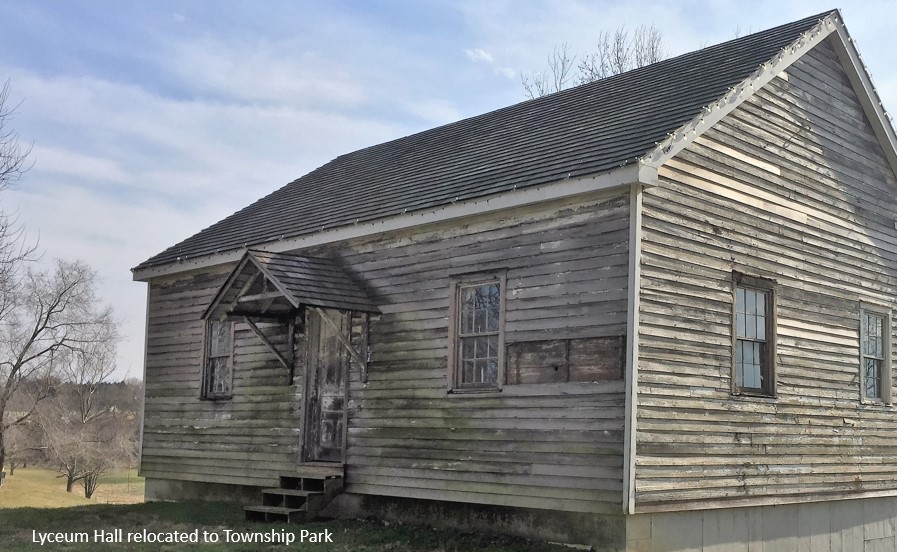
Center for Historical Architectural & Design's Assessment
In the years following the move the rehabilitation and future use of the Lyceum was discussed but a concensus could not be reached. In 2016, the Historical Commission asked the Center for Historical Architectural & Design (CHAD) at the University of Delaware to research the history of the building, assess the condition of its architectural fabric and make recommendations for repairs and preservation of this historic structure.
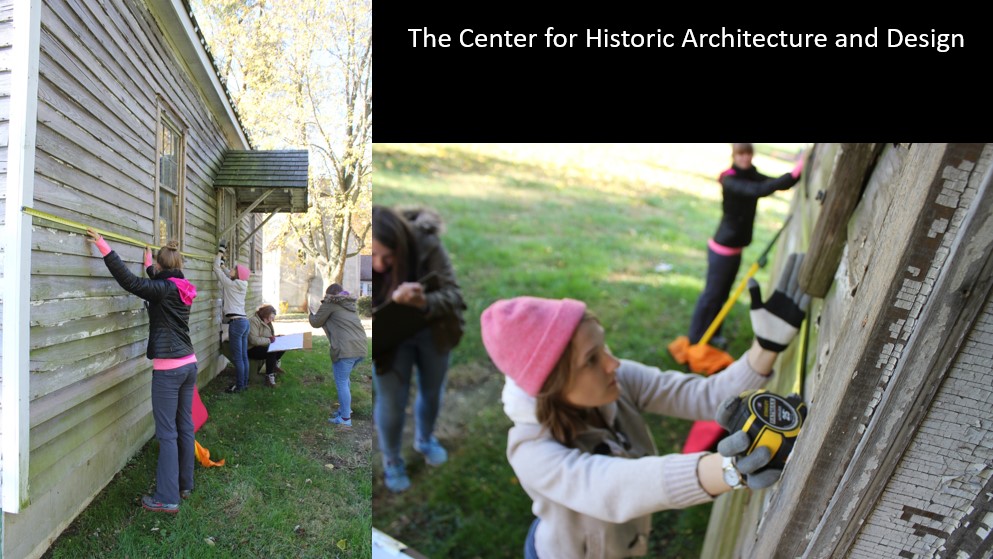
CHAD Students Documenting the Lyceum
No interior pictures or documentation were found that showed the original floor plan. It was likely one large room without interior partitions. The present interior configuration dates to the later school era. This later period (1880's) is also historic. The windows, door, partition wall, blackboard strip, and the privies all date to the 1880s or later.
Constructed circa 1852, the building is clad in 20th-century wood clapboards covering earlier, flush horizontal wood planks. Due to some missing clapboards, a section of these planks are visible on the front elevation and are most likely the original exterior wall finish.
The Lyceum now rests on a new poured concrete foundation and has a new wood shingle roof.
The rest of the exterior clapboards, windows and doors are in relatively good repair.
CHAD's Recommendations:
- Replace missing exterior clapboards on the front facade. It is recommended that the later clapboards be retained over the earlier, historic plank siding.
- Scrape, prime and paint or stain the siding and trim.
- Replace missing trim around windows and door.
- Treat for carpenter bees & termites; remove animal nest above front door.
- Retain windows.
- Retain entry door.
- Retain and install, as an exhibit, the 1892 voting booths which are a really unique and fairly rare resource.
- Consider re-installing period-appropriate blackboard.
Exposed original plank siding
Typical window
(to be retained)
Front door
(to be retained)
Voting Booths


Restoration
Following the move, an extensive multi-year restoration project was undertaken led by Historical Commission members Lynn Sinclain and Brian Roberts. Stuart Roberts provided an extensive evaluation of the work required. Damaged flooring was replaced, extensive plaster repairs were done, the partition wall repaired, shutters were repaired and reinstalled, windows were rebuilt, and everything was repainted.
Window Restoration
Following standard Historic Preservation practices, the old windows were carefully restored rather than replaced with commercial windows.
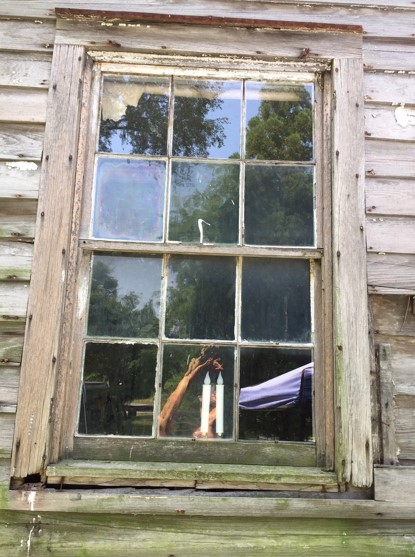
Window Prior to Restoration
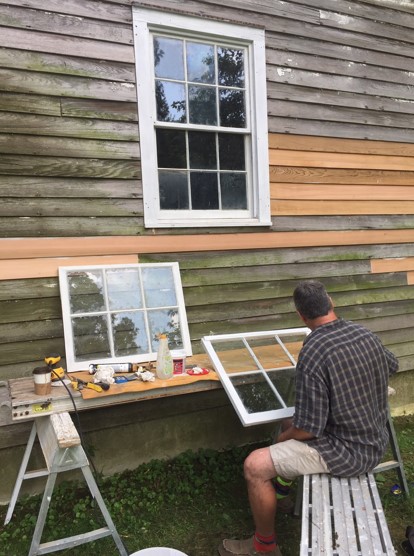
Rebuilding Window Sashes
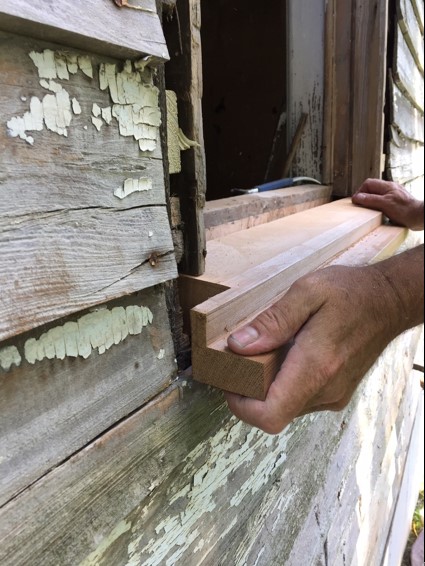
Replacing Rotted Window Sill
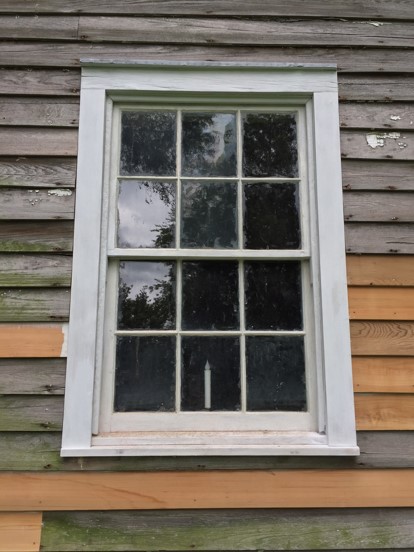
Restored Window
Lyceum Re-opening
The Lyceum re-opened on Oct. 19, 2019 with an event featuring presentations by Historical Commission members Michael Leja and Dr. Peggy Jones, and CHAD's Catherine Morrissey and Michael Emmons.
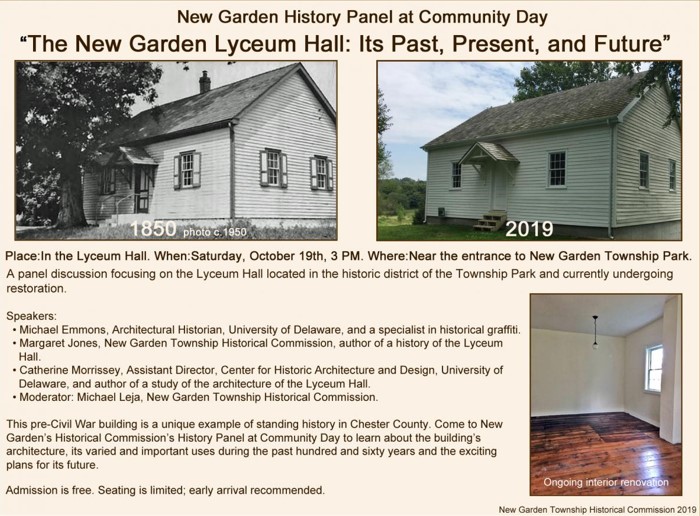
National Historical Register Status
In 1993, when the Lyceum was still in its original location at the corner of Route 41 and New Garden Road East, PennDOT studied the potential impact of the Rt 41 widening project on nearby historic structures. As a result of this study, PHMC determined that the Lyceum was eligible for the National Register ("eligible" is not the same as being listed).
In 2017, following the move from its original location to the park, the Historic Commission requested a re-evaluation of the status of the Lyceum. Relocation of historic buildings is generally discouraged because of the loss of historic context. Also the Lyceum had been placed on a decidely non-historic concrete foundation and the chimneys and roof structure had been altered after the move.
Karen Arnold, Pennsylvania State Historic Preservation Office, said the meeting to determine eligibility for the Lyceum was one of their longest discussions on one of the smallest buildings they have ever reviewed. The members were divided over the new location and non-historic alterations but eventually agreed that the Lyceum was still eligible for National Historic Register.
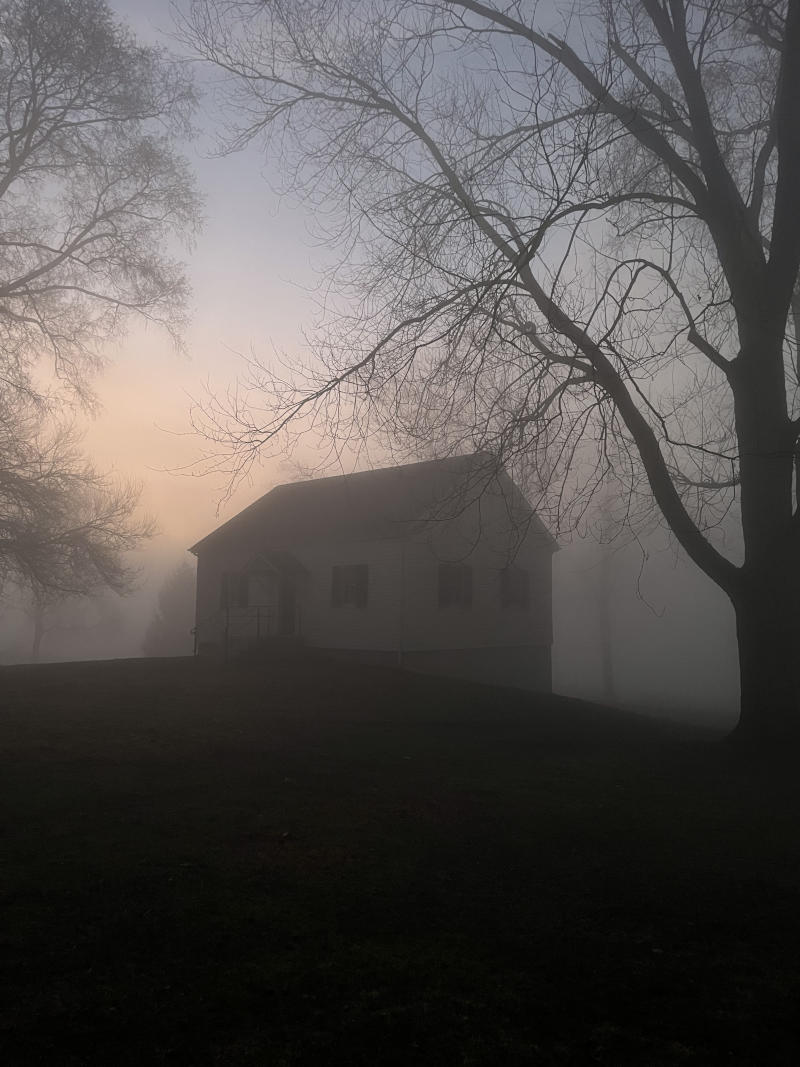
photo: Regina Fees, 2026
Would if its walls could speak.
A chamber of sequestered voices.
Speakers of Justice and intellect,
What's right. What's wrong.
Trembling hearts hiding above
Embracing freedom's promise.
Neighbors greeting neighbors
Talking, listening from its plain benches.
Inspiring teachers writing in chalk
Students recording in pencil.
Decision municipal and national of
Supervisors around a small wood table
And voters in tall private booths.
An aviator's craft hanging on a wall.
A caretaker gifting this treasure.
And then quiet for years and years.
Until one glorious autumn day
with walls and floors renewed
Voices heard again and anew forever more!
Chris Robinson, 2019